
How to contact websites for articles comes down to one readable note that names the site, the idea, and the reader it serves. Editors reply to a note that specific, while a copied blast sent to many inboxes gets archived before anyone opens a file.
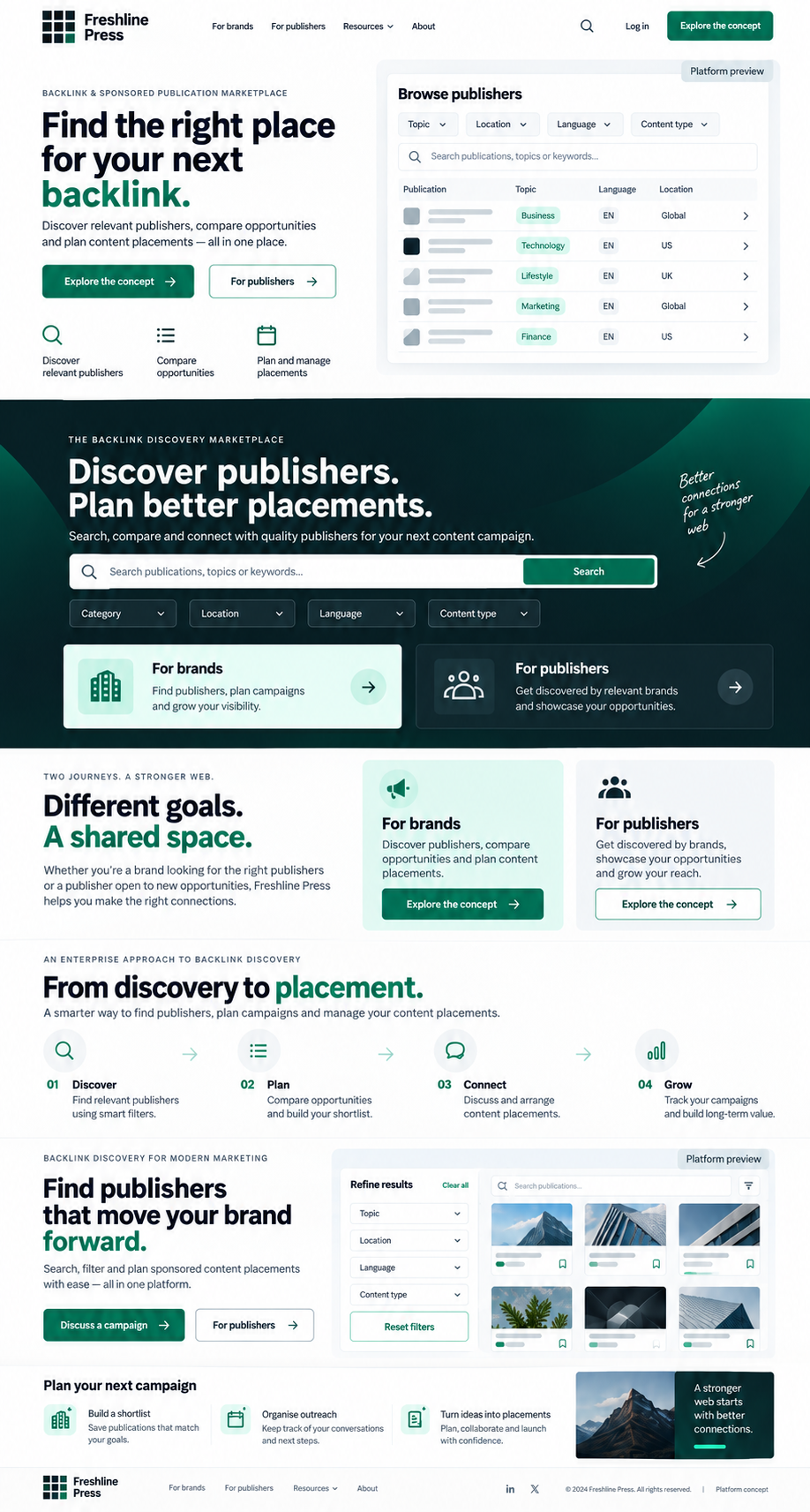
Treat it like a brief. State the project, the question the article answers, and any constraint that changes the edit: a product mention, a paid placement, a single market. FreshlinePress asks for the same brief from people who get in touch, meaning the question, the project, and the constraints. Publisher discovery on the homepage is still a planned interface. So the pitch has to show the fit on its own.
Would you answer it on a Monday morning, with a full inbox waiting?
On this page
- How to contact websites for articles if you want a reply
- What guest post outreach should include
- How to read a guest posting website
- Guest posting websites and a single guest posting site
- Guest posting sites and a product story
- Where guest posting becomes sponsored content
- What a link building strategy settles first
- Where link building services fit
- Campaign link management after you send
- When link publishing is the real request
- What a plan of publisher should confirm
- Questions before you send
How to contact websites for articles if you want a reply?
Lead with the article idea, follow with the reader, and close with one ask. Four or five sentences can do it. Mention a real section or a recent theme on their site so they can tell you actually opened the page.
Your bio gets one line, about work that matches the topic. If a product, a study, or a commercial claim will appear, say so up front. Sophie Laurent reviews FreshlinePress articles before publication and runs claims through an internal content quality checklist: the source, how recent it is, and whether a commercial interest sits in the sentence. That habit comes from 16 years in commerce and products, and from about 190 assignments, checks, or edits in the field.
Offer two angles. Say you’ll follow their usual length. Leave the full draft out of the first email unless their guidelines ask for it; one sample they can open is enough.
What should guest post outreach include?
Guest post outreach should name the publication, one topic, the intended reader, and whether any payment is involved.
When a site is willing to talk, FreshlinePress moves to its guest post placement workflow for the next stage. Until there’s an agreement, the ask is just a conversation. After the first note, how to contact websites for articles is simple: add a new fact, or stop.
Make the subject line the topic. “Idea: how independent shops label refurbished stock” gives someone a reason to open it. “Collaboration request” gives them nothing.
One follow-up is fair if it brings a source or a narrower angle. Sending the same text again adds nothing. And if the site publishes a form or a named route for contributors, use it the first time.
How do you read a guest posting website before you pitch?
Read the guest posting website through its recent headlines, its named authors, and any label on commercial pieces.
Skip past the homepage banner and skim the last month of posts. Plenty of sites sound broad in their introduction and run something much narrower. Pitch to what they publish.
Look for a date and a source on each post. This is the part of how to contact websites for articles that tells you whether your claim will survive their edit. Byline always the brand? Ask who edits contributors. Writers named? Write in the voice they already publish.
How do guest posting websites differ from a single guest posting site?
Guest posting websites gathered on one list still need separate notes, because their readers differ. A guest posting site is judged by its own rules: the topics it refuses, the word range, and the person who should receive the idea.
Working a shortlist means a fresh reason for every site. Save the guidelines address, the editor’s name when it’s public, and one headline you could extend without stretching it. Then mention that headline in your note, so the fit shows in the first two lines.
Five close matches give you five real notes. A long list of lookalikes drifts back into one template, and that’s how to contact websites for articles badly. Sites in the same niche still disagree on links, disclosure, and author credit. Check those lines on each one before promising anyone a result.
Why do some guest posting sites fit a product story?
Some guest posting sites fit a product story when their readers already discuss the product and the claims can be checked. A paragraph that only lists features belongs in a catalogue, and only where the site asked for one.
Sophie Laurent’s field is commerce and products: product information, consumer-facing wording, and commercial communication. Sources get compared on date, method, local conditions, and conflicts of interest. Because FreshlinePress works with international clients, a note written for one market should name that market. When the story depends on a local rule, naming it is part of how to contact websites for articles.
What would a careful editor cut? If the honest answer is most of the product lines, rewrite before you send.
Where does guest posting become sponsored content?
Guest posting becomes sponsored content when a brand pays for the placement or controls the message. Say which one you’re proposing in the first note.
At FreshlinePress, a paid piece is labelled, has an author, and stays on topic. Paid links use rel=”sponsored”. Sponsored posts stay within 40% of posts, and never more than one in a day. That’s a publishing limit. Search-ranking outcomes are not guaranteed.
If a colleague hasn’t come across the label before, the Wikipedia overview of paid placements gives a neutral definition. When you offer payment, spell out what you want back: a byline, a product mention, a link, or a review of the draft. Price comes up only after they confirm they accept paid work.
What should a link building strategy settle before you write?
A link building strategy should settle the reader you want, the mention you’ll ask for, and the sites that already cover the topic.
The Wikipedia page on earning links places a contributed article among several routes. Either way, the piece has to be worth reading if nobody counts the link. Decide this before you open a blank email, since how to contact websites for articles depends on it.
Put the aim in one sentence you could say out loud. “I want a plain explanation of cold-chain labels for shop managers” can guide a shortlist. “I want a link from any busy site” can’t tell you who to write to.
Where do link building services fit?
Link building services fit when someone has to organise a long list and keep every note distinct. The editor still needs a specific idea. If you hire help, topic and claim approval stay with you. You’re the one who’ll have to stand by the paragraph later.
How does campaign link management protect a reply?
Campaign link management is a record of who you wrote to, which angle you offered, and what came back. Without it, how to contact websites for articles turns into two people emailing the same editor.
A simple sheet works: site, date, angle, status, next step, and whether money is involved. Log a refusal as carefully as a yes. A no on one angle can leave another open later, provided you kept the reason.
When several people send mail, one person owns the sheet. That’s what stops two “just checking in” notes landing on the same morning.
When is link publishing the real request?
Link publishing is the real request when the published URL is the result you need and the article is the vehicle. If that’s the truth, say it. An editor can welcome the article and still refuse a commercial link. Honesty belongs in how to contact websites for articles, because a wrapper is easy to spot.
Give the target URL and the reason a reader would use it. A homepage link request with no reader reason gets filed away fast. Paid link? Expect a sponsored marker. If their policy is unclear, ask before writing the paragraph that depends on the link.
What should a plan of publisher confirm?
A plan of publisher confirms topic boundaries, author credit, disclosure, link treatment, and the edit path before the full draft starts.
Keep the answers in the same thread as the pitch. Once they’ve confirmed a byline, a label on paid mentions, and how links are marked, you have terms to follow. If they won’t confirm link treatment, don’t promise colleagues anything about a link attribute.
FreshlinePress describes its own order as discover a relevant context, compare it, then discuss the placement. Relevance comes before reach. So: have you agreed those points, or are you hoping the editor sorts them out inside the draft?
Questions before you send
Should the first email include the full draft?
Only when that site’s guidelines ask for it. Otherwise, send the angle, the reader, and two sources you’ll use. Mention if a draft exists and offer to adjust the length. Keeping it out of the email body lets the editor respond to the idea first.
How long should you wait for a reply?
About a week, unless the site states a different review window. Then send one follow-up with a new fact: a sharper reader, a source, or a tighter title. Still nothing? Mark the site closed in your tracker and write to a better-fit publication. A third identical note won’t create a relationship.
Can one note offer both an unpaid article and a paid placement?
Yes. Label the choice in one sentence and stop there, for example an unpaid explainer, or a paid piece with a product mention and a sponsored link. Leave rate cards and countdown language out of the first note. A site that doesn’t sell placement will tell you. One that does will answer the paid option. An unlabelled mix makes an editorial pitch read like an ad.
What if the site names no editor?
Use the contributor route the site actually publishes: a form, a tips address, or the editorial desk. Greet the desk and name the section; guessing a first name from a staff photo is a bad idea. If the only public route is a company switchboard, wait until you find a content contact, or use the contributor form. How to contact websites for articles still starts with a person who can say yes to a topic.
Related reading
- Link building strategy: plan the campaign
- How to Choose Link Building Services: A Practical Comparison
Sources
Author: Sophie Laurent, business administration studies with a specialisation in supply chain.
Last updated: November 2026
Leave a Reply